

Plants are one of the easiest ways to refresh your home. They add color, texture, and natural character without requiring a major renovation. Whether you have a bright sunroom or a small apartment with limited light, the right plants can make your space feel more welcoming and comfortable.
A successful indoor plant display is about more than placing a pot on a shelf. Consider the size of your room, the amount of light available, your daily routine, and the style you want to create. With a few thoughtful choices, you can build a home that feels fresh, balanced, and full of life.
Start With the Space You Have
Before buying plants, take a walk through your home and notice the available spaces. Look for empty corners, bare shelves, windowsills, and areas that could benefit from a little color.
Pay attention to:
– Natural light throughout the day
– Room temperature and drafts
– Available floor and shelf space
– Nearby water sources
– Areas that need visual interest
A sunny kitchen window may be ideal for herbs, while a darker hallway may work better with a plant that tolerates low light. Matching each plant to its location helps it stay healthy and keeps maintenance simple.
It can also help to take measurements before shopping. A plant that looks small in a garden center may become large enough to block a walkway or crowd a shelf. Leave space for growth and make sure each container is easy to move when needed.
Choose Plants That Fit Your Lifestyle
The best plants are not always the most unusual ones. Choose varieties that match the amount of care you are willing to provide.
If you prefer a low-maintenance home, consider plants known for being forgiving, such as:
– Snake plants
– Pothos
– ZZ plants
– Spider plants
– Cast iron plants
If you enjoy regular care, you may prefer plants that benefit from closer attention, including herbs, ferns, or flowering houseplants. These can be rewarding, but they may need more consistent watering, brighter light, or occasional pruning.
Think about your schedule as well. If you travel often, select plants that can handle a little time between waterings. If you enjoy a daily routine, caring for plants can become a pleasant part of your morning or evening.
Create a Focal Point With a Large Plant
A large plant can transform an empty corner and give a room a strong visual anchor. It can also help soften furniture with straight lines or fill an area that feels unfinished.
Good locations for a large plant include:
– Beside a sofa or reading chair
– Near a bright window
– In an empty entryway corner
– Next to a bookcase
– Beside a desk or cabinet
Choose a container that suits the scale of the plant. A tall plant in a very small pot may look unstable, while a large container can overwhelm a small room. Use a plant stand to add height or to position the leaves closer to the light.
Make sure the plant does not block doors, walkways, vents, or windows. A beautiful display should still allow the room to function comfortably.
Add Layers With Small Plants
Small plants are useful for adding detail to shelves, tables, and countertops. Rather than placing them randomly, group them in different sizes to create a layered look.
Try combining:
– One taller plant
– One medium-sized plant
– One small trailing plant
– Containers with varied shapes or textures
For example, place a small plant on a stack of books, a medium plant beside it, and a trailing variety on a nearby shelf. This creates height and movement while keeping the arrangement organized.
Odd-numbered groupings often look natural, but balance matters more than strict rules. Leave some open space between plants so each one can be appreciated.
Use Plants to Refresh Different Rooms
Each room offers different opportunities for greenery.
Living Room
The living room is a good place for a statement plant, a grouping near a window, or a trailing plant on a bookcase. Choose containers that coordinate with the room’s existing colors. Neutral pots create a calm look, while bold colors can add a cheerful accent.
Kitchen
Use the kitchen for compact plants and fresh herbs. Basil, mint, rosemary, and thyme can be attractive additions when placed in suitable light. Keep containers away from heat sources and areas where water could damage surfaces.
A narrow windowsill planter can add greenery without taking up valuable counter space. If your kitchen has limited light, choose decorative plants that are better suited to those conditions.
Bedroom
Plants can make a bedroom feel peaceful and finished. Place one on a dresser, bedside table, or windowsill, while keeping pathways clear. Avoid overcrowding the room, especially if the space is small.
Select simple containers and plants with soft, flowing shapes for a relaxed appearance. A single well-placed plant may have more impact than several crowded pots.
Bathroom
Many bathrooms offer warm, humid conditions that suit certain plants. A shelf, window ledge, or hanging planter can make the room feel more inviting. However, check the available light before choosing a plant, as bathrooms without windows may need varieties that tolerate low light.
Use containers with good drainage and protect wooden surfaces from excess moisture.
Refresh Your Containers
You do not always need new plants to create a fresh look. Updating the containers can make familiar plants feel completely different.
Consider:
– Matching ceramic pots for a clean, coordinated style
– Woven baskets for a warm, natural look
– Simple terracotta pots for a classic garden feel
– Colorful containers to brighten a neutral room
– Raised planters to add height
Use a waterproof saucer inside decorative baskets or on furniture. This helps protect floors and surfaces from water damage. Always make sure the plant has proper drainage, even when using a decorative outer container.
You can also group containers by color, material, or shape. Repeating one design element throughout a room helps the display feel intentional.
Make Vertical Space Work Harder
When floor space is limited, look up. Hanging planters, wall shelves, and plant stands allow you to add greenery without taking up much room.
A few ideas include:
– Hanging a trailing plant near a bright window
– Adding narrow shelves to an empty wall
– Using a ladder-style stand in a corner
– Placing small plants on top of cabinets
– Creating a compact vertical garden
Install hanging planters and shelves securely, especially above furniture or in busy areas. Choose lightweight containers for high locations and check them regularly for leaks.
Build Simple Care Habits
Healthy plants are the key to a refreshed home. Create a simple routine that fits naturally into your week.
Check plants regularly for:
– Dry soil
– Dusty leaves
– Yellowing or damaged leaves
– Signs of overcrowding
– Water collecting in saucers
Water according to each plant’s needs rather than following one schedule for every container. Many indoor plants prefer the soil to dry slightly between waterings, but requirements vary. Read the care information that comes with each plant and adjust based on light, temperature, and the season.
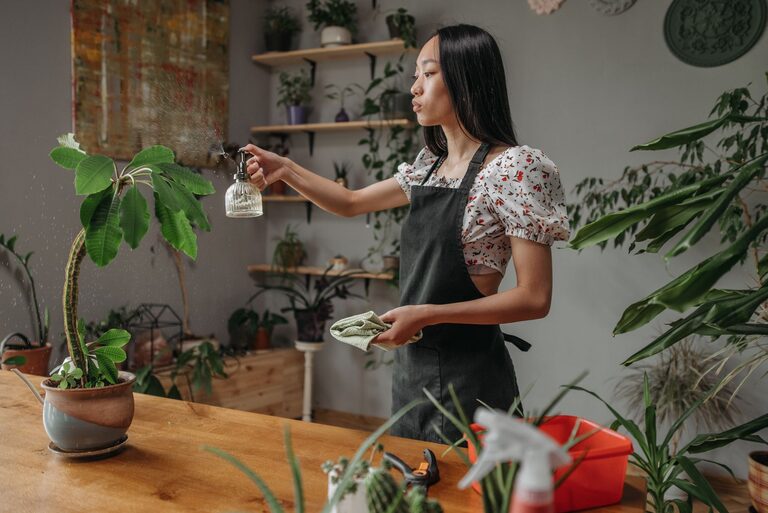
Dust can also reduce the plant’s fresh appearance. Gently wipe broad leaves with a clean, damp cloth and remove dead leaves as needed. Rotating containers every few weeks can help plants grow more evenly toward the light.
Refresh Your Display With the Seasons
You can keep your home feeling current by changing plant arrangements throughout the year. Move plants closer to brighter windows during darker months, then adjust their placement when sunlight becomes stronger.
Seasonal changes can also include:
– Swapping heavy containers for lighter ones
– Adding flowering plants for a pop of color
– Grouping plants together during colder weather
– Using woven or natural materials in warmer months
– Pruning fast-growing plants to maintain their shape
You do not need to replace everything. Moving a few plants, changing one container, or adding a new small variety can make the room feel noticeably different.
Keep the Look Balanced
The most attractive plant displays combine greenery with open space. Avoid filling every available surface. A few carefully placed plants will create a cleaner and more relaxed effect than a crowded collection.
Use a mix of heights, leaf shapes, and textures, but repeat colors or materials to maintain harmony. Most importantly, choose plants you enjoy seeing and can care for comfortably. When their needs match your home and routine, they will remain a lasting part of your decor.
With thoughtful placement, suitable containers, and simple care habits, plants can refresh nearly every room. Start with one empty corner or bare shelf, then build your indoor garden gradually. Small changes can bring more warmth, color, and natural beauty into your everyday surroundings.