

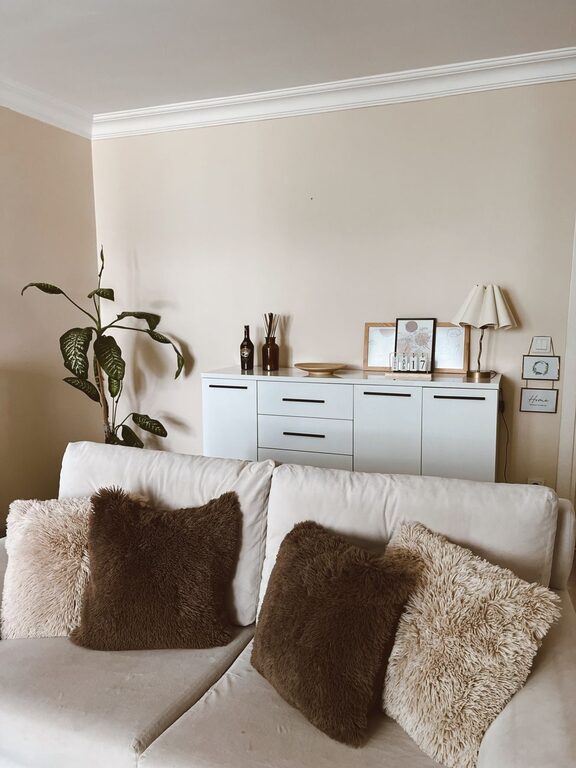
A living room refresh does not require a complete makeover or a large budget. Small changes can improve the room’s comfort, color, and overall appearance. By working with what you already own, adding a few thoughtful details, and shopping carefully, you can create a space that feels new without replacing everything.
Start With a Simple Reset
Before buying anything, remove items that no longer belong in the room. Clear coffee tables, shelves, and side tables, then decide what you want to keep, move, donate, or store elsewhere.
A tidy room makes existing furniture and decor easier to appreciate. It can also show you where the room needs improvement. For example, you may discover that the space needs better lighting, more storage, or a stronger focal point rather than a full set of new furniture.
Try these low-cost first steps:
– Rearrange furniture to improve movement through the room.
– Remove decorations that make the space feel crowded.
– Group similar items together instead of spreading them across the room.
– Clean windows, lamps, baseboards, and upholstery.
– Rotate decor from other rooms in your home.
Sometimes, a thorough cleaning and a new furniture arrangement make the biggest difference.
Rearrange the Furniture
Moving furniture is one of the easiest ways to change the mood of a living room for free. Consider placing the sofa in a different position, moving chairs closer together, or shifting the television to create a more comfortable conversation area.
Start by measuring the main pieces and sketching a few possible layouts. Leave clear walking paths and avoid blocking windows, doors, or heating vents. If the room feels disconnected, bring seating closer to a central feature such as a coffee table, rug, or fireplace.
You can also create separate zones in a larger living room. One area might be used for conversation, while another could hold a reading chair, small desk, or play space.
Refresh Textiles
Soft furnishings can quickly change the color and feel of a room. Instead of replacing a sofa or armchair, update the surrounding textiles.
Affordable options include:
– Throw pillow covers
– Cozy blankets
– Washable slipcovers
– Lightweight curtains
– Small area rugs
– Seasonal table runners
Pillow covers are especially useful because they take up little storage space and are often less expensive than new pillows. Choose two or three colors that work well with your current furniture. If your sofa is neutral, you can add color through patterns. If the sofa already has a strong color, simple solid fabrics may create a more balanced look.
Layering different textures, such as cotton, woven fabric, and soft knits, can make the room feel more inviting without adding clutter.
Create an Accent Wall
Paint can have a major visual impact, but you do not need to paint the entire room. An accent wall behind the sofa, media console, or bookcase can add depth and help define the room’s focal point.
Before choosing a color, observe the room at different times of day. Natural and artificial light can change how paint looks. Sample a small section first, and let it dry before making a final decision.
If painting is not practical, consider these alternatives:
– Removable wallpaper
– Peel-and-stick wall decals
– A gallery wall
– A large fabric wall hanging
– A collection of baskets
– A neatly arranged group of framed prints
Keep the treatment focused on one area so it feels intentional rather than busy.
Update the Lighting
Good lighting can make a living room feel warmer and more comfortable. If the room has only one overhead fixture, add layers with table lamps, floor lamps, or small accent lights.
Look around your home for lamps that are not being used in other rooms. A new lampshade can also update an older lamp without requiring a complete replacement. Choose bulbs with a warm, comfortable glow for areas where you relax.
For a budget-friendly improvement, try:
– Moving a lamp closer to a reading chair
– Adding a small lamp to a dark shelf
– Replacing an outdated lampshade
– Cleaning dusty light fixtures
– Using battery-powered lights inside bookcases
Place lighting at different heights to make the room feel more balanced. A combination of overhead, eye-level, and low lighting often creates a more welcoming atmosphere.
Style Shelves and Surfaces
Shelves, mantels, and coffee tables can look refreshed with a simple restyling session. Remove everything from the surface, then return only the pieces that are useful or visually appealing.
For a balanced arrangement, combine different heights and shapes. For example, place a small plant beside a stack of books and a decorative object. Leave some open space so the display does not look crowded.
You can also group items by color or material. A few wooden pieces, glass objects, or neutral ceramics may create a more organized appearance than a mixture of unrelated items.
On a coffee table, use a tray to gather smaller items. This makes the table look neater and makes it easier to move decorations when you need more space.
Add Affordable Natural Elements
Plants and natural materials can bring life to a living room. If you already have plants, divide healthy ones or move them into new locations. A plant stand, woven basket, or simple ceramic pot can make a familiar plant feel different.
If caring for live plants is difficult, choose low-maintenance varieties or use a few dried branches in a vase. Natural touches can also include:
– Woven baskets
– Wooden trays
– Cork coasters
– Linen covers
– Smooth stones in a bowl
– Dried grasses
Use natural elements selectively. One or two well-placed pieces can add warmth without making the room feel themed.
Make a Gallery Wall
A gallery wall is a flexible way to decorate a large blank wall. You do not need expensive artwork. Use postcards, family photos, children’s artwork, calendars, fabric samples, or printable designs.
To keep the display cohesive, choose frames in a similar color or arrange the pieces within a consistent shape. Before hanging anything, lay the frames on the floor and experiment with the layout. You can also trace each frame on paper and tape the shapes to the wall.
Start with a small grouping and add to it over time. This approach allows you to spread out the cost and make the display more personal.
Shop With a Plan
When you do need to buy something, avoid shopping without a clear goal. Make a short list of the items that would have the greatest effect, such as a lamp, rug, or set of pillow covers.
Compare prices at thrift stores, consignment shops, discount retailers, and online marketplaces. Look for quality materials and items that can serve more than one purpose. A storage ottoman, for example, can work as seating, a footrest, and hidden storage.
You can save more by:
– Shopping secondhand
– Waiting for seasonal sales
– Buying covers instead of complete replacements
– Checking measurements before purchasing
– Choosing versatile colors
– Repurposing items you already own
A budget refresh works best when every purchase has a clear role.
Finish With a Personal Touch
The most appealing living rooms often reflect the people who use them. Add a few meaningful objects, such as travel souvenirs, favorite books, handmade pieces, or framed photos. These details make the room feel finished without requiring expensive accessories.
Refresh the room gradually rather than trying to change everything at once. Start with cleaning and rearranging, then add textiles, lighting, artwork, or plants as your budget allows. With a thoughtful plan, small updates can make your living room more comfortable, useful, and welcoming.